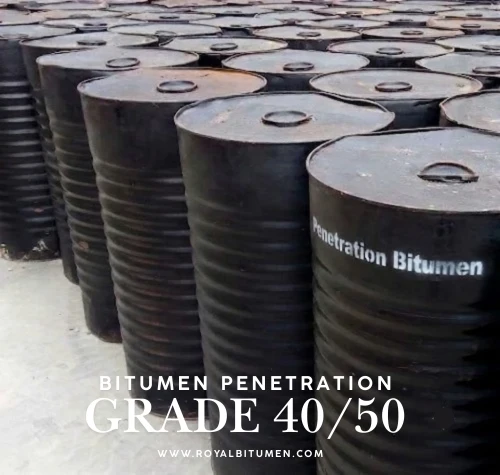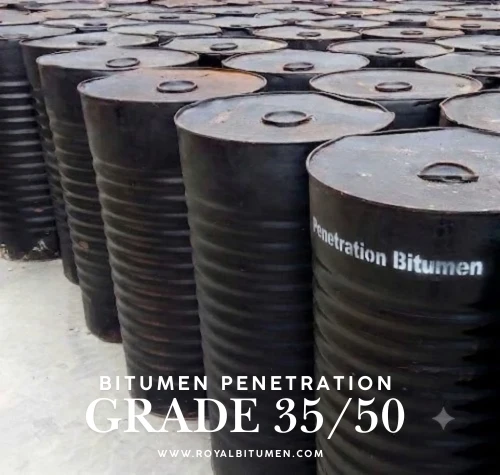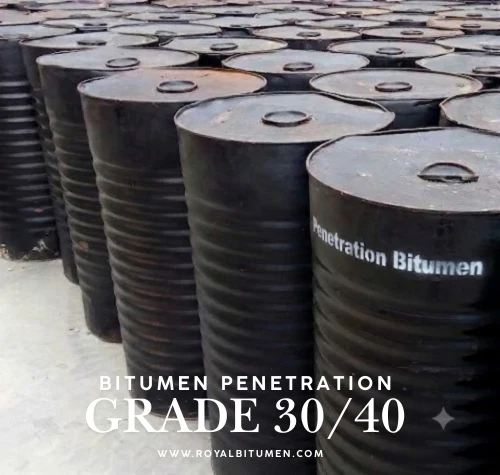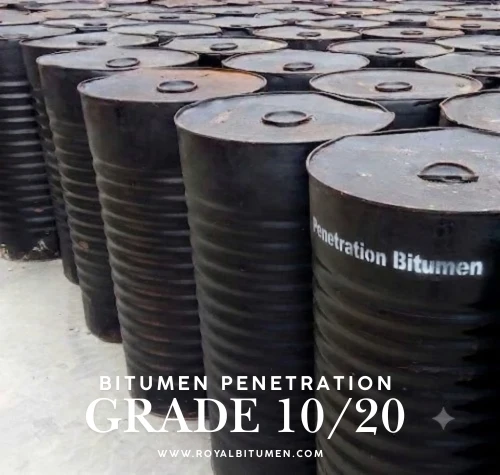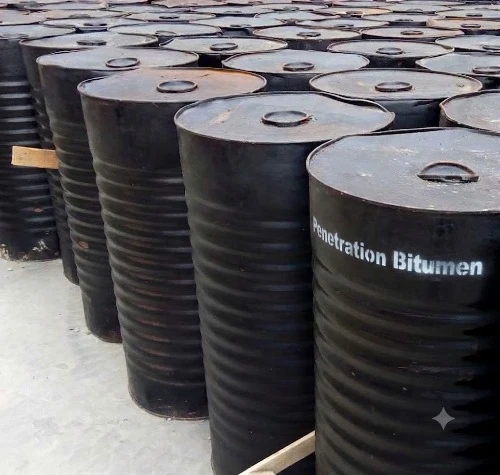
What is penetration grade bitumen?
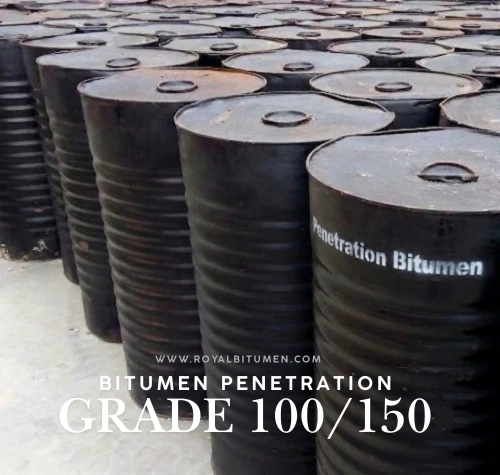
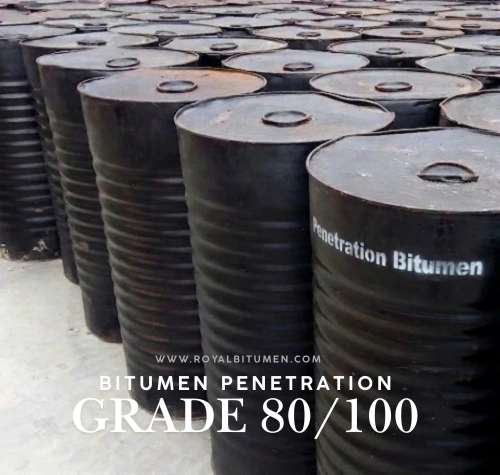
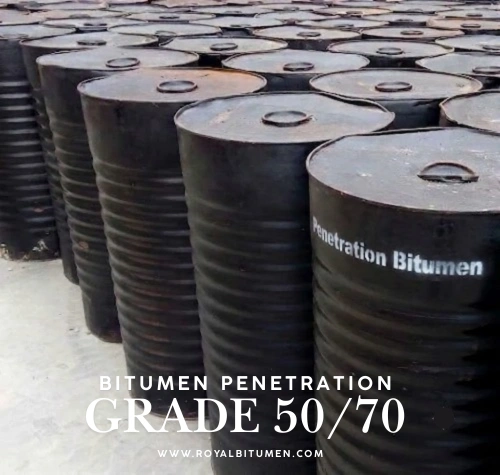
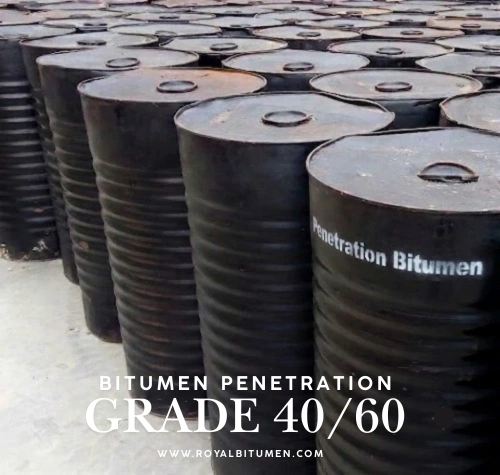
Penetration Grade Bitumen is a standard bitumen used in road construction. It is made in refineries through aeration or vacuum bottom distillation.
The main way to categorize this bitumen is by its penetration level, based on a standard needle test (ASTM D5). In this test, a 100-gram needle penetrates the bitumen sample for 5 seconds at 25°C. The measurement unit is tenths of a millimeter.
This type of bitumen is thermoplastic. This means it becomes soft and runny when heated, and hard and solid when cooled. Because of how it reacts to temperature changes, penetration grade bitumen is the main base for making asphalt, bitumen emulsions, and waterproofing products in construction projects.
Measuring the Hardness of Penetration Grade Bitumen
The classification of this material depends on a standardized needle penetration test, which quantifies consistency and hardness. The testing process involves several specific steps:
Sample Stabilization: The bitumen is placed in a container and stabilized in a water bath at a standard temperature of 25°C.
Needle Application: A standard 100g needle is released to bear on the surface of the sample for exactly five seconds.
Measurement: The depth the needle reaches is measured in tenths of a millimeter (dmm).
Hardness Correlation: A lower penetration number (e.g., 40/50) indicates a “hard” bitumen with shallow needle depth, whereas a higher number (e.g., 80/100) indicates a “soft” material.
Selection Criteria and Regional Grades
Engineering requirements dictate the choice of grade based on environmental factors and structural demands. Selecting the appropriate Penetration Grade Bitumen is essential to prevent pavement failure under varying conditions.
Primary selection factors include:
Climate: In hot regions, harder grades like 40/50 or 60/70 are used to resist softening and deformation. Cold climates require softer grades like 80/100 to maintain flexibility and prevent brittleness.
Traffic Loads: High-traffic roads generally require harder, less viscous grades to provide better durability and resistance to rutting.
Soil Composition: Softer bitumen often performs more effectively in high-particle-density soils, such as clay.
Industrial Uses of Penetration Grade Bitumen
This grade is the most widely utilized binder in the industry because it ensures strong adhesion and moisture resistance. Its applications extend across various sectors of construction:
Manufacturing hot mix asphalt for road base and wearing courses.
Paving for highways, airport runways, and flexible base courses.
Serving as a foundational material for other road binders, such as cutbacks, emulsions, and polymer-modified binders.
Quality Standards and Testing Parameters
To ensure safety and performance, refineries conduct several technical tests alongside the penetration measurement.
Softening Point: This test determines the temperature at which the material can no longer support a standard metal ball, indicating its heat resistance.
Flash Point: A critical safety metric that identifies the temperature at which the bitumen’s vapors will ignite.
Ductility: This measures how far a sample can be stretched at 25°C before breaking, confirming its elasticity.
Solubility: Performed to ensure the material is pure and free of inorganic impurities.
Logistics for Penetration Grade Bitumen Exports
Global suppliers manage the transport of bitumen using diverse packaging options to minimize environmental impact and costs. Standard logistics configurations include:
New Steel Drums: Available in weights ranging from 150kg to 220kg.
Jumbo Bags: Large reinforced bags designed to hold 1000kg.
Bulk Transport: Handled via bitutainers (holding 20,000 liters) or dedicated bulk tankers for large-scale projects.
Order Minimums: Suppliers typically require a minimum order of 100 metric tons for containerized shipments and 7,000 metric tons for bulk cargo.
Through careful distillation and rigorous testing, this material remains the industry standard for creating resilient, long-lasting pavement infrastructures worldwide.
How do polymers like SBS modify bitumen properties?
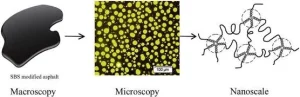
Polymers like SBS (Styrene-Butadiene-Styrene) modify bitumen by forming a physical 3D network inside the binder matrix. SBS is a thermoplastic elastomer—meaning it combines the strength of hard plastics with the flexibility of rubber.
1. How the Mechanism Works
SBS is a block copolymer made of two distinct phases:
Styrene Blocks (Hard Domains): Located at the ends of the polymer chain. They aggregate together at ambient temperatures to act as physical cross-links, providing structural stiffness and high-temperature resistance.
Butadiene Blocks (Soft Domains): Located in the middle. They absorb light maltene fractions from bitumen, swelling up to 9 times their original volume to create a flexible, rubber-like continuous network.
When heated above ~100°C, the polystyrene blocks melt, allowing the bitumen to flow like a liquid for mixing and pumping. As it cools down, the cross-links reform automatically without permanent chemical bonding.
2. Specific Property Improvements
Modifying bitumen with 3–6% SBS by weight fundamentally alters its physical and rheological properties:
| Property | Standard Bitumen | SBS-Modified Bitumen (PMB) | Engineering Benefit |
| High-Temp Performance | Softens quickly at 50–60°C | Softening point rises above 70–80°C | Prevents pavement rutting under heavy summer traffic |
| Low-Temp Flexibility | Brittle below -5°C to -10°C | Remains flexible down to -20°C or colder | Prevents thermal cracking in harsh winters |
| Elastic Recovery | < 20% recovery after stretching | > 70–90% recovery | Recovers shape after wheel load passes, extending fatigue life |
| Temperature Susceptibility | High (sensitive to weather) | Low (broader operating window) | Stable performance across extreme seasonal shifts |
| Cohesion & Adhesion | Moderate | High bond strength with aggregates | Reduces stripping and ravelling caused by moisture |
3. Microstructure & Phase Inversion
The final properties depend heavily on the polymer concentration:
Low Concentration (< 3% SBS): The bitumen remains the continuous phase, with polymer dispersed as isolated droplets. It slightly increases viscosity but offers limited elastic recovery.
High Concentration (3.5–5% SBS): Phase inversion occurs. The swollen SBS polymer network becomes the continuous phase, trapping bitumen droplets inside its elastic matrix. This continuous network delivers high elasticity and fatigue resistance.